Winslow Arsenault Winslow Arsenault World affairs, read closely
A corridor in a foreign ministry at night, cut by a single band of hard light across the floor

Diplomacy · Energy and shipping

Ukraine Reports New Mediation Offers as Energy and Port Attacks Intensify

Kyiv says India, Turkiye, Egypt and the United States have each offered to help open talks with Russia. The ideas on the table are narrower than a full peace plan — and energy, ports and Black Sea shipping sit at the center of every one.

Four governments, one instruction: keep the talks small enough to survive

Ukrainian officials this week described a set of mediation offers forwarded through diplomatic channels from India, Turkiye, Egypt and the United States. None of the four is presented as a full settlement framework. Each is structured around a specific, verifiable behavior that could be paused — strikes on generating capacity, missile and drone launches aimed at port infrastructure, or the inspection regime that lets grain leave Black Sea ports.

The reason for the narrow scope is practical. A ceasefire across the entire front line would require agreement on monitoring, withdrawal lines and enforcement inside territory neither side currently controls. A pause on grid or port strikes can be checked by outside observers with commercially available tools, which makes it possible to test the idea without committing either side to a broader political position.

India

Energy infrastructure pause

The offer described by Kyiv focuses on a mutual pause in strikes against electricity generation and transmission. India has kept working relationships with both capitals and has been a repeated venue for back-channel meetings on humanitarian corridors and grain shipments.

Turkiye

Black Sea shipping corridor

Ankara's proposal centers on the shipping lanes and inspection arrangements around Odesa and the Danube ports. Turkiye already helps run the corridor that lets grain and metals move, and has argued that a shipping truce is easier to verify than a land ceasefire.

Egypt

Grain supply guarantee

Cairo's interest is straightforward. Egypt is among the largest importers of Ukrainian wheat, and its proposal ties any port arrangement to a written guarantee that food shipments continue under inspection regardless of what happens elsewhere.

United States

Strike-limit proposal

Washington's message, as relayed by Ukrainian officials, is less a draft and more a menu: choose the strike categories both sides could live without, define a verification channel, and test compliance over a fixed number of weeks before widening anything.

None of the four has been published in full, and Kyiv has not named the officials who carried them. Treat the accounts as claims from one side of a war, subject to confirmation from the other.

The week in short: what changed, and what did not

Reporting as it stands this week

The offers

Four separate proposals, all narrower than a full truce

Each offer addresses one category of behavior — grid strikes, port strikes, shipping inspections, or a defined pause menu — rather than a territorial settlement. That is the point: it lets the parties test whether the other side can hold a line at all.

Unconfirmed

Energy

Grid attacks continue across multiple regions

Ongoing

Ports

Odesa and Danube terminals remain the pressure point

Ongoing

Shippers

Owners still weigh insurance against sailing time

Watch list

Status lines describe what this desk can verify from open sources and official statements at the time of writing. They are not an official account, and they will change as officials speak.

Why the negotiations keep getting narrower

Full ceasefires need monitors, maps and enforcement. Narrow pauses need a camera, a published list of targets, and someone willing to be embarrassed when a strike lands on the wrong side of a line.

Mediators have learned the same lesson twice. Broad frameworks — a document that maps the whole front, sets withdrawal lines, and assigns third-party enforcement — have failed to move past the drafting stage because the parties cannot agree on who would be stationed where, or what happens when a violation is disputed. Narrower proposals survive because their scope is smaller than their enforcement problem.

A pause on grid strikes, for example, can be checked against publicly tracked outage patterns, satellite imagery of substations, and the day-by-day releases both militaries already issue. A shipping truce can be checked through port traffic, insurance filings and the maritime tracking services that brokers use. Neither of those requires a peacekeeping force or a map that both sides have signed.

The trade-off is that narrow deals do not end the war. They buy a category of civilian infrastructure a window of quiet and give the mediators a measurable compliance record to build on. When a window holds, the next proposal can be a little wider. When it fails, the failure is specific enough to argue about.


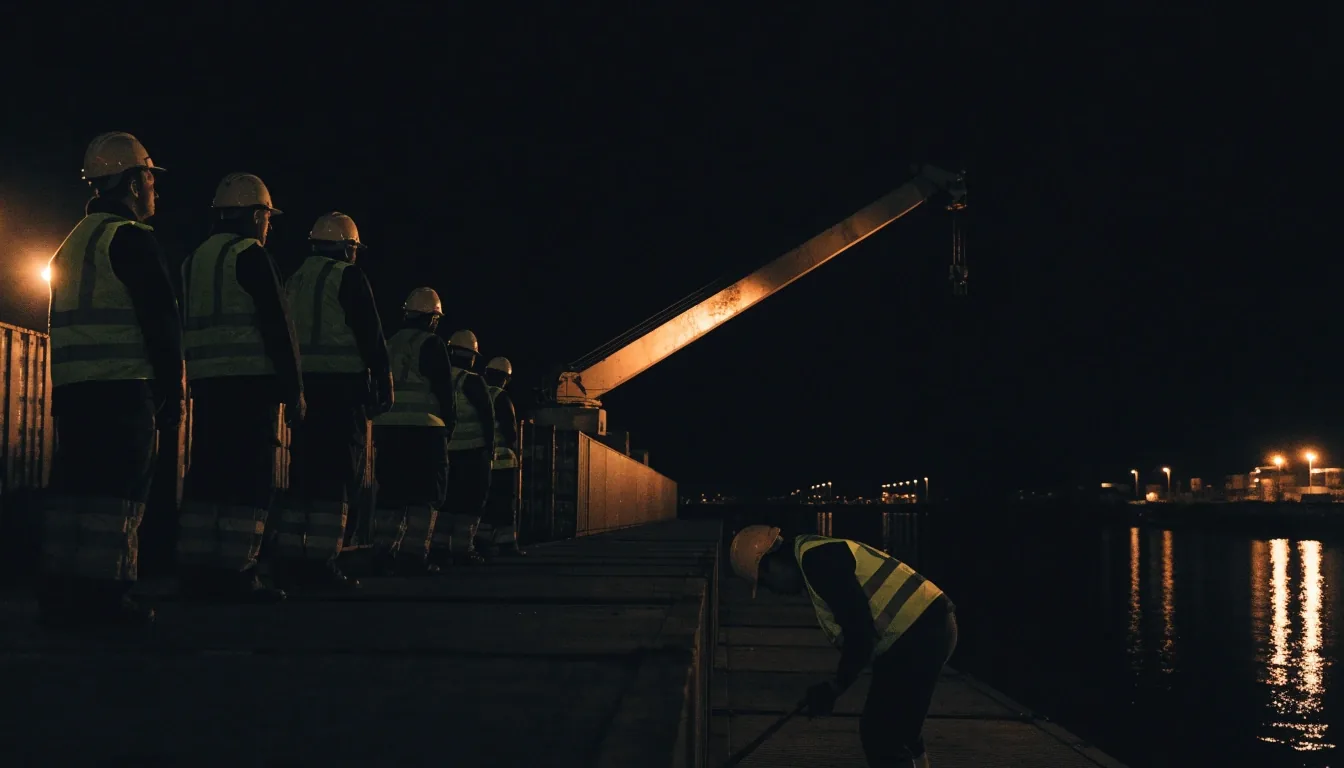
Container silhouettes and one lit crane arm at a port at night, water reflecting sodium light
A port at blackout. Bulk terminals and container berths are among the assets any Black Sea shipping truce would have to define before it means anything.

What a narrow pause could cover

  • Power generation Halting long-range strikes on thermal and hydroelectric plants, and on the substations that link them to cities.
  • Port infrastructure Ending attacks on berths, grain elevators, loading equipment and the rail links that feed them.
  • Shipping lanes Keeping the inward and outward sea routes open under inspection rules that both sides already use in principle.
  • Air corridors Pausing drones and missiles aimed along specific routes, verified against launch reports both militaries publish.
A composing room at midnight with one overhead lamp and hard diagonal light bands from slatted blinds
A truce you can photograph is a truce you can argue about. That is why the offers on the table are small.

It is also why every useful proposal in this round shares the same shape: one behavior, one verifiable signal, one window long enough to learn something. Kyiv's read is that the wider the agreement, the more places it can be broken. The narrower the agreement, the harder it is to walk back without being caught.

What to watch in the next stretch of talks

Watch for a published list of protected targets. Without one, a pause on grid or port strikes has no edge to test. Watch, too, for a monitoring channel both sides are willing to name — an existing inspection body, a neutral port authority, or a group of observers the mediators fund. If neither appears, the offers stay in the category of diplomatic courtesy rather than mechanism.

Secondary signals matter here as well. A quiet week at the ports is more informative than a communiqué. So is the pace at which insurers adjust Black Sea premiums, and whether shippers re-book grain and metals cargo through Odesa or route them around it. Those choices are made by people with money on the line, and they tend to move before the statements do.

Questions readers keep sending

Short answers to the questions that come in most often about mediation offers and what a narrower truce arrangement actually means in practice.

What exactly has Ukraine said it received?

Ukrainian officials describe mediation offers from India, Turkiye, Egypt and the United States. The accounts vary in detail — some read as formal proposals, others as exploratory messages carried through normal diplomatic channels. Each has been summarized publicly in general terms, not published as a document, so the specifics of any draft remain unconfirmed.

Why is a partial truce being discussed instead of a full ceasefire?

A full ceasefire across the front line requires both sides to agree on withdrawal lines, monitoring arrangements and enforcement, and neither side currently accepts the other's terms on those points. A partial pause in one category — grid strikes, port strikes or shipping — can be verified with a smaller apparatus and tested over a short window without locking either government into a broader political position. Mediators generally treat a narrow pause as a test of whether a wider one is even possible.

How would anyone know a pause was being kept?

Grid strikes leave visible traces: outage maps, satellite imagery of damaged substations and generation sites, and the day-by-day operational summaries both militaries already publish. Shipping pauses show up in port traffic, insurer statements and the vessel tracking that brokers use to price cargo. Attribution is not settled by any single source, which is why the offers under discussion usually name two or more independent channels for verifying any claim of a violation.

What is at stake for Black Sea shipping specifically?

Ukraine's seaborne exports move through Odesa, the Danube ports and the connecting rail lines, and those terminals are exactly the targets any port-strike pause would cover. If the corridor holds, grain and metals move on schedule and importers in North Africa and the Middle East face less price pressure. If it fails, insurers raise premiums, some owners decline to sail, and the cargo finds longer routes at higher cost.

Where to read more from this desk

Winslow Arsenault covers world affairs, diplomacy, markets, technology and security for a United States readership. The Ukraine story sits inside a broader file on war, energy and shipping that runs across several sections of this site.

If you need to reach the desk directly, the newsroom answers during business hours and by email. Let us know which thread you are following — a specific claim, a document, or a portion of the reporting you want checked — and we can point you to the published account or take the question further.

The newsroom

Newsroom hours are business hours for the United States eastern time zone. Urgent correction requests are handled by email first.